ONLINE SUMMER SCHOOL
St Anne’s College, University of Oxford is pleased to invite high-achieving 16, 17 and 18 year-old students from across the world to join our online summer school taking place over a three week period from 3 – 21 August 2026. Since 2014, our biannual Hong Kong Summer School has enabled around 130 students each year to experience authentic Oxford teaching. We are delighted to extend this opportunity to a wider international audience through an online format. Applications are now open.
PROGRAMME OVERVIEW
Applicants should have achieved a level of education equivalent to GCSE/completion of high school education and should possess an appropriate level of English — please visit the University of Oxford’s website for an overview of which qualifications would be acceptable.
This academically rigorous course is designed to support:
- Super-curricular enrichment
- University and career exploration
- CV and application development
- Direct engagement with Oxford academics, including Professors, Fellows, PhD students and Post-Doctoral researchers.
The online St Anne’s College Summer School will allow students to study one of five topics in depth over 3 weeks of lectures, small group activities, and independent study. Each will explore a global challenge, and how leading research teams are advancing the fundamental science behind it. A typical week will include 2 lectures by senior Oxford researchers in a typical university format, an independent activity involving literature research or problem set, and 2 hours of practical work and demonstrations, with time to discuss and debate ideas in Oxford style tutorials led by active researchers.
In addition, there will be a lecture each week for everyone about learning and research at Oxford and other research-intensive universities.
Individual Subjects Offered:
- Robotics and AI (Led by Professor Digby Chappell, Dept. Engineering, Oxford): This module will focus on robotics and machine learning, starting with modelling the motion of robots in week one, then controlling robots in week two, and finally enabling robots to learn to control themselves in week three. Students will perform a mixture of hands-on mathematics and coding challenges, complemented by written exercises to inspect robotics as a field of study. This module is best suited to students with an interest/background in studying engineering, computer science, and mathematics.
- Stem cells and Neuroscience (Led by Professor Francis Szele, Dept. Physiology, Anatomy, and Genetics, Oxford): This series will focus on a number of aspects of brain anatomy function and repair. We will first explore the major subdivisions of the human brain. We will next explore the different types of cells living in the brain. Neurons are the functional workhorses of the brain, and we will describe their varieties and major functions. Next, we will discuss development of the brain and disorders of the brain. Our brains are regulated by many different classes of molecules within the cells and outside of the cells. Next, we will home in on brain stem cells. These cells can be produced in the lab and then used fro brain repair. There will be several points of discussion embedded within the lectures. This module is best suited to students with a background in science.
- Climate change – lessons from the geological past, solutions for the future? (Led by Professor Stuart Robinson, Dept. Earth Sciences, Oxford and Professor Don Porcelli, Dept. Earth Sciences, Oxford) This module will focus on how the geological record of past climate change can be used to understand, predict and address current and future climate change. The course will provide an overview of fundamental aspects of the climate system, an introduction to palaeoclimatology and examples of how understanding Earth’s natural processes might be used to mitigate carbon emissions. Students will perform a mixture of exercises to further their understanding and to gain exposure to research techniques. This module is best suited to students with a broad scientific background (e.g. chemistry, physics and/or biology) and an interest in earth and environmental sciences.
- From atomic structure to the properties of matter (Led by Professor Volker Derringer, Dept Chemistry, Oxford) This module will explore the connections between the microscopic (atomic-scale) structure of materials and their macroscopic properties. Students will learn about experimental and computational techniques that form the basis for our present understanding of materials structures: from the origin of atoms and foundational X-ray diffraction experiments to emerging AI-for-science approaches. Practical exercises will include computer simulations of disordered structures and ways to analyse them using Python code, as well as training in visualising and communicating scientific findings. An outlook will be given on the role that materials chemistry plays for the development of next-generation technologies. This module is best suited to students with an interest in studying chemistry, materials science, earth sciences, or related disciplines. You can find further detail here.
- Biomedical Science: From Cells to Systems (Led by Professor Helen Christian, Dept. Physiology, Anatomy and Genetics, Oxford) This module explores how the human body functions across multiple levels, from cells and tissues to complex signalling systems. Students will investigate how neurons communicate, how hormones regulate the body, and how drugs can modify these processes to treat disease. By the end of the course, students will learn about key signalling mechanisms in the nervous and endocrine systems, how cells and tissues contribute to organ function, how drugs modify biological systems to treat disease, andapplying scientific reasoning to experimental and clinical problems.
General lectures will be given by Professor Don Porcelli, Dept. Earth Sciences, Oxford, and will explore how to go from studying at a school to studying at a major UK or US research University.
Why Choose our Summer School?

Gain valuable preparation for university applications

Learn from Oxford Experts

Increase your academic confidence
Academic Highlights
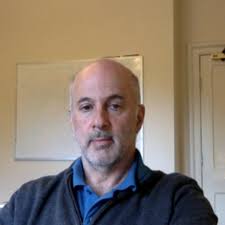
Professor Don Porcelli is Professor of Geochemistry and Tutorial Fellow at St Anne’s College. Students may learn from Professor Porcelli who’s research encompasses planetary formation, geochemistry, isotope systems, climate processes, and environmental change, offering students valuable insight into contemporary scientific challenges.
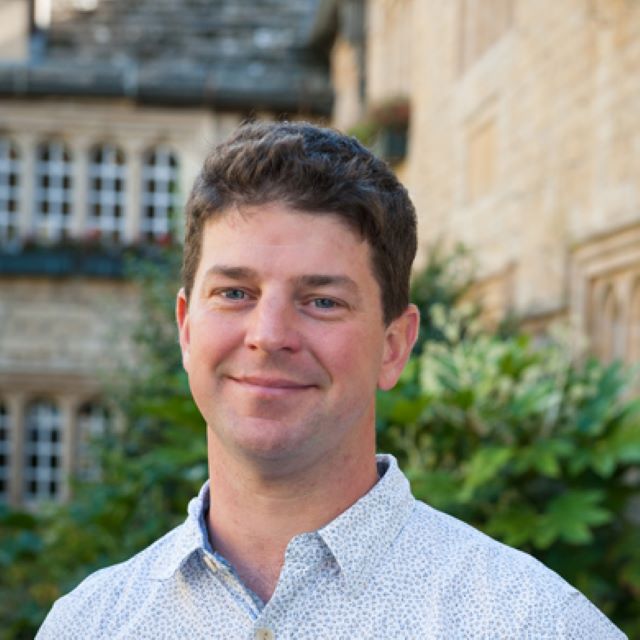
We are also delighted to highlight Professor Stuart Robinson, another St Anne’s Fellow who students may be taught by during the programme. Professor Robinson is Professor of Sedimentary Geology and Tutorial Fellow at St Anne’s College. His research focuses on paleoceanography, sedimentology, and the reconstruction of ancient environments — providing students with a deeper understanding of Earth’s history and long-term climate change.
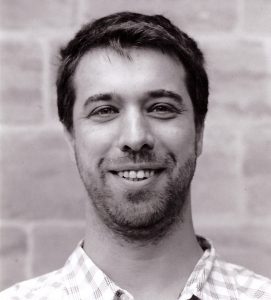
In addition, students may learn from Professor Dmitry Belyaev, Professor of Mathematics and Tutorial Fellow at St Anne’s College. Professor Belyaev works in a range of topics from pure mathematics to applications of mathematics. He develops advanced mathematics and connects it with real-world physical and engineering problems. His contributions introduce students to the power of mathematics in solving complex global challenges.
Certification and Outcomes
Upon successful completion, students will receive an official certificate of achievement and completion from St Anne’s College at the University of Oxford. The programme provides:
- Experience of the Oxford tutors and tutorial model
- Enhanced academic confidence and subject exploration
- Valuable preparation for university applications and interviews
Frequently Asked Questions
Do I need to be planning an application to Oxford?
No. While this course will provide a taste of Oxford life and equip you with information about what Oxford tutors might be looking for in prospective students, the transferable skills it teaches will be useful regardless of whether you are planning to apply to Oxford, Cambridge, another UK university or a university in the United States or elsewhere.
Do I need to be sure already of which course I’d like to pursue at University?
No. This course asks you to choose particular areas of focus, and gives an indication of what sort of educational background will be required for you to benefit most from the teaching. However, the course will expose you to a wide range of ideas and in no way commits you to a certain path in the future.

Are there bursaries or funding available for this course?
At the moment, we are unfortunately not able to offer financial hardship grants. As 2026 is a pilot year for the programme, our funding and capacity are still limited. In future years, we hope it may be possible to offer dedicated free, means-tested places, making the programme accessible to a broader range of participants.
Once the application process has closed, there may be an opportunity to offer some financial assistance. However, unfortunately we are not able to guarantee or confirm this at this stage.
What will the schedule for the programme be?
The exact timings are still TBC, as students will be attending from different time zones, so the final schedule will depend on the cohort. More information will be confirmed once bookings have closed in June.
As an example, the structure for our three-week online medicine module is as follows. On all modules, a student should expect a combination of live teaching sessions, practical activities, and independent study spread across the week rather than full-day teaching each day.
- Each week includes smaller class sessions (up to five):
- 2 × 1-hour lectures by Fellows and senior researchers (university-style teaching)
- 1 × 2-hour practical/demonstration session led by senior researchers, supported by a postdoctoral researcher or advanced PhD student
- Independent work following practicals or as a structured assignment
There is also a General Lecture Series attended by all module students. Using medicine as an example these would include:
Critical Thinking in Biology – interpreting data and making scientific arguments
What is Biomedical Science and how is it studied at research universities?
Pathways into Medicine and Biomedical Research
Registration and Fees
The summer school will run online from August 3 to August 21st 2026.
This is a direct St Anne’s College, University of Oxford programme
Applications are accepted only through this microsite
The programme cost is £1,500 for a single module or £2,750 for two.
Interested students are encouraged to apply using the form below
St Anne’s College Online Summer School – Payment & Cancellation Disclaimer
By registering for the St Anne’s College Online Summer School, participants agree to the following terms:
All course fees must be paid in full at the time of registration in order to secure a place on the programme. Registrations will not be confirmed until payment has been received.
St Anne’s College reserves the right to cancel or postpone the Online Summer School where this is necessary, including (but not limited to) circumstances such as low enrolment, technical issues, staff availability, or events beyond the College’s reasonable control (force majeure). In the event that the programme does not proceed as planned, the College will provide a full refund of all fees paid.
While every effort will be made to deliver the programme as advertised, the College reserves the right to make reasonable changes to course content, scheduling, speakers, or delivery format where necessary.
Except in the case of programme cancellation by the College, fees are non-refundable. Participants are responsible for ensuring they are able to attend and access the online platform.
St Anne’s College shall not be liable for any indirect or consequential loss, including (but not limited to) loss of opportunity, data, or anticipated benefits arising from participation in, or cancellation of, the programme.
By completing registration, participants acknowledge that they have read and accepted these terms.